Smashing The Atom: A Brief History Of Particle Accelerators
<html>
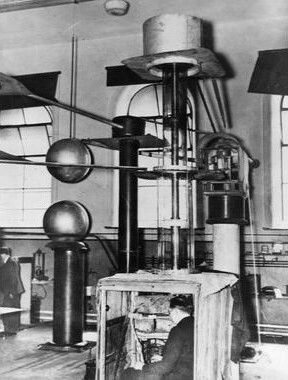
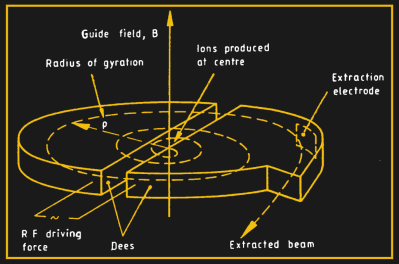
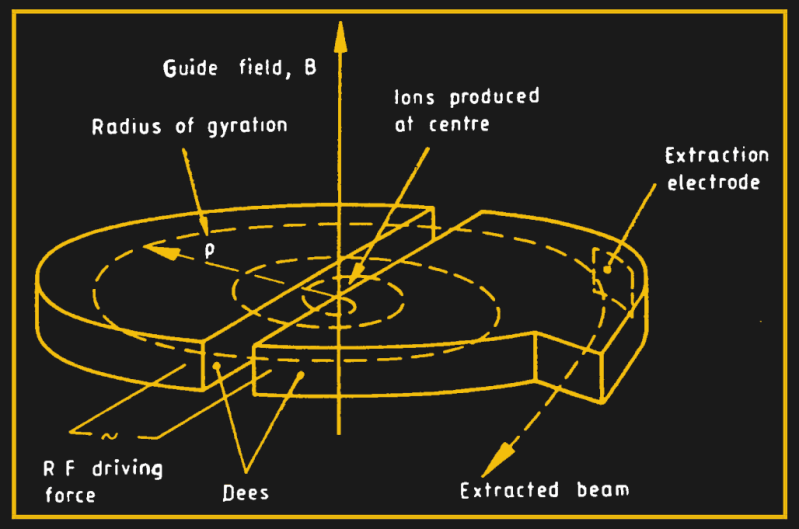
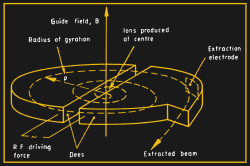
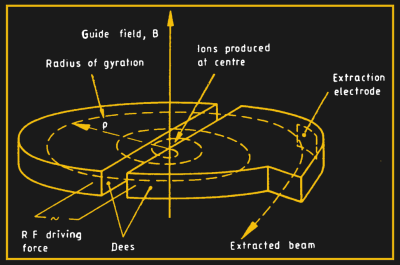
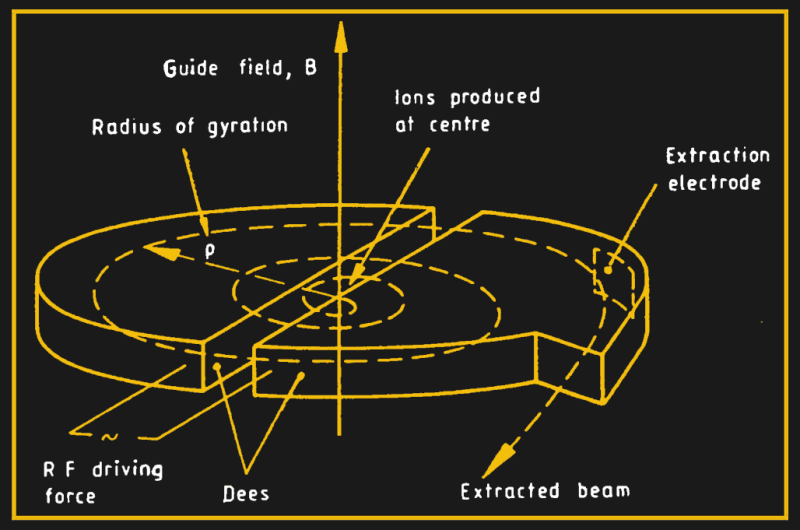
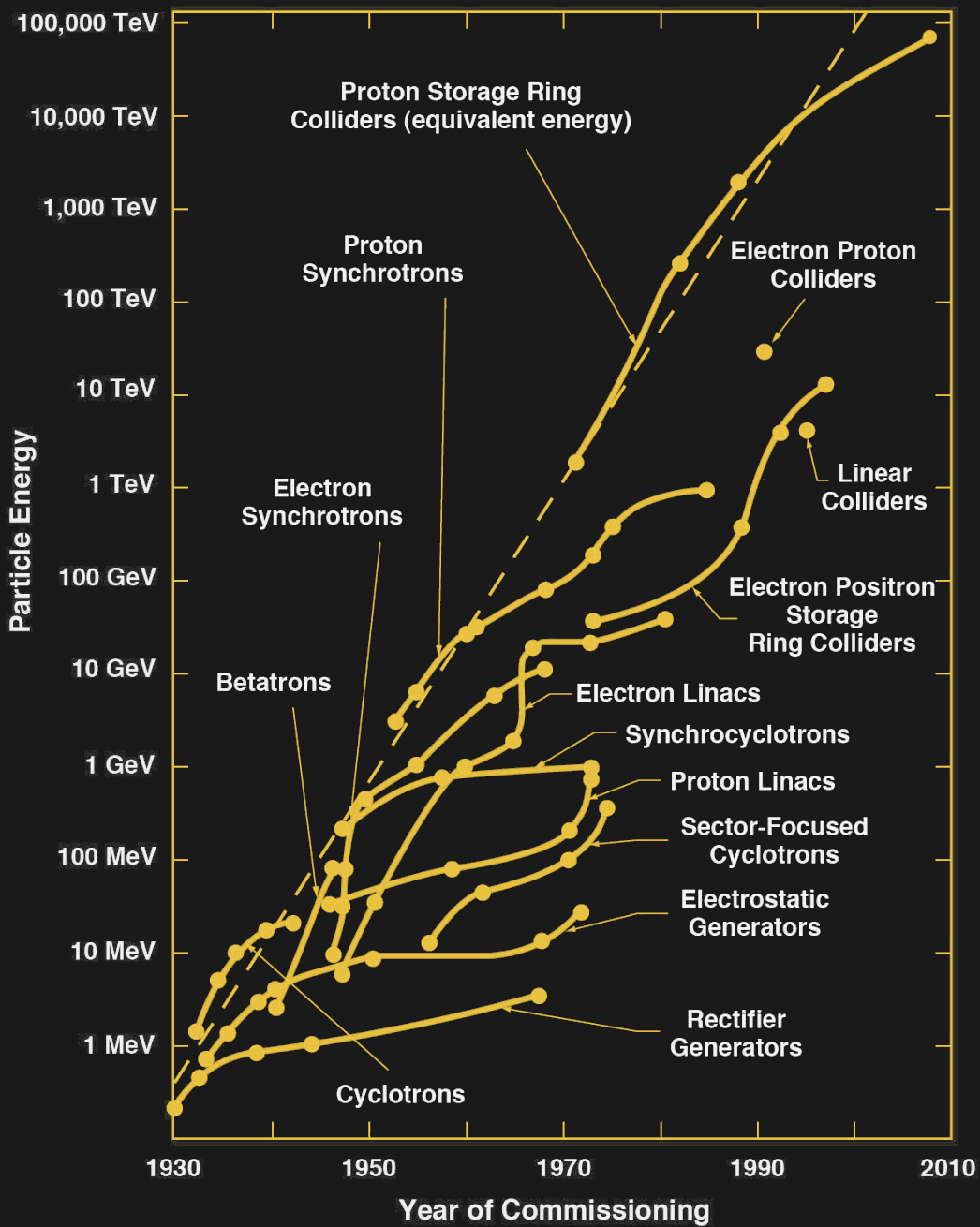
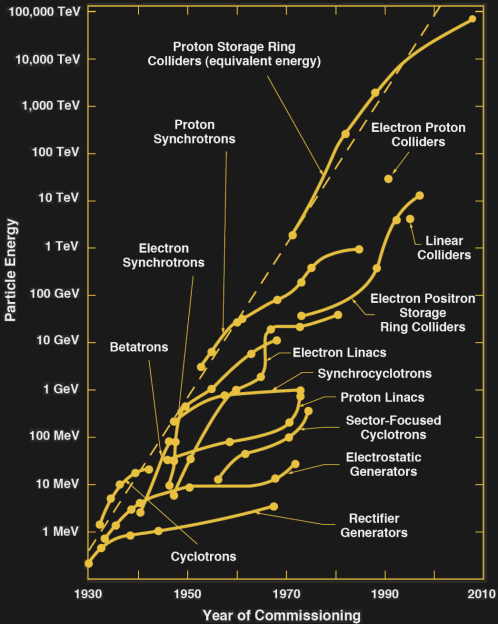
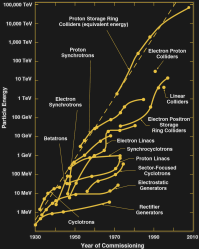
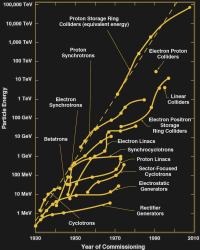
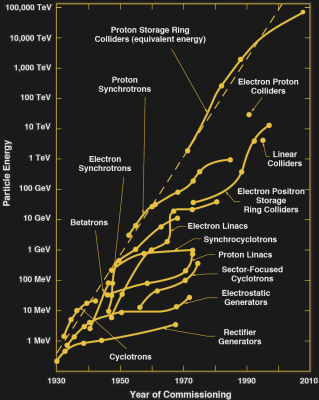
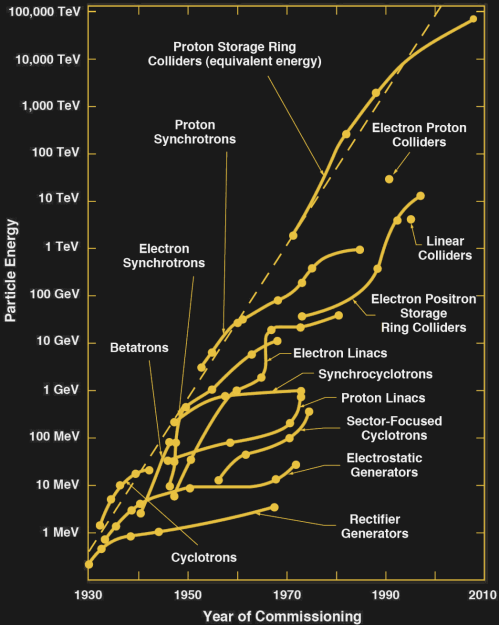
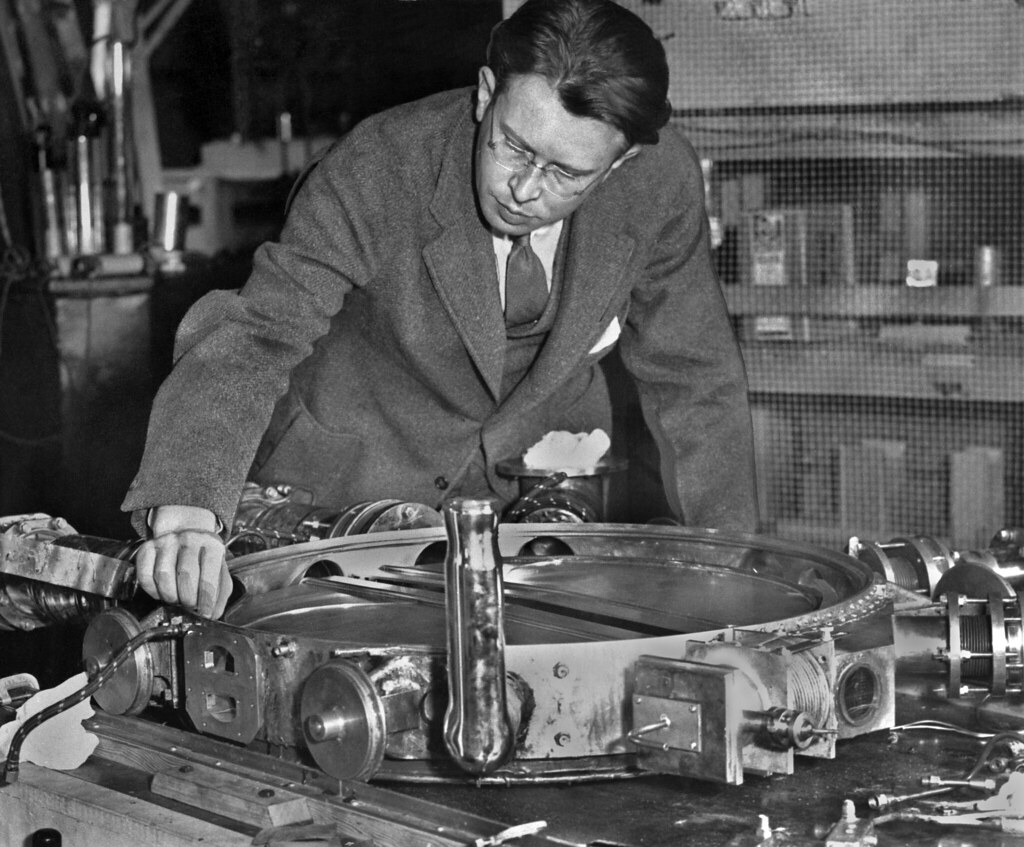
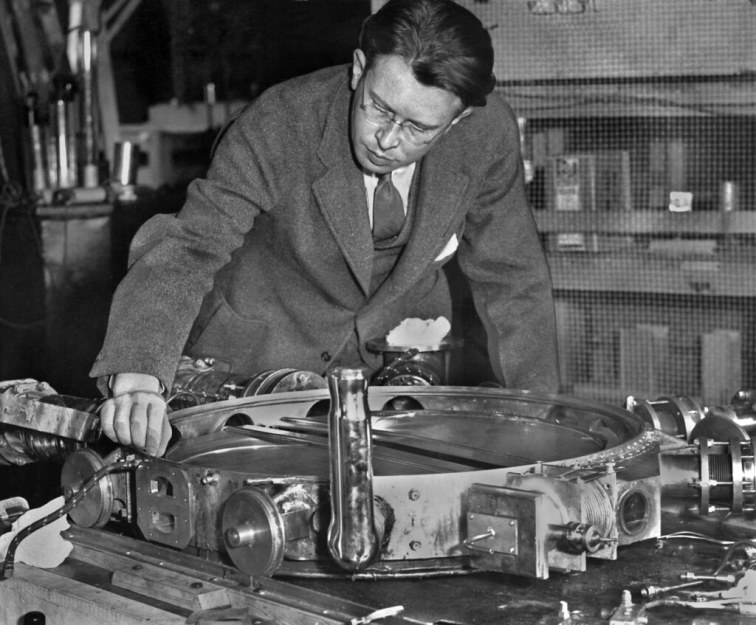
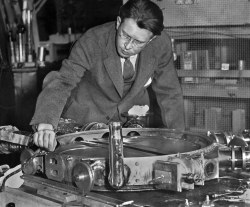
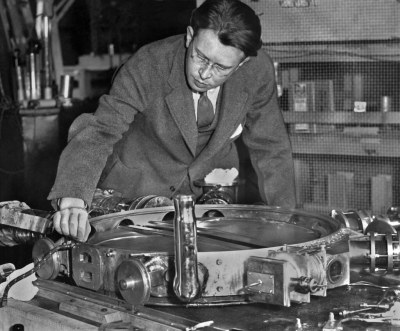
<p>When it comes to building particle accelerators the credo has always been “bigger, badder, better”. While the Large Hadron Collider (LHC) with its 27 km circumference and €7.5 billion budget is still the largest and most expensive scientific instrument ever built, it’s physics program is slowly coming to an end. In 2027, it will receive the last major upgrade, dubbed the High-Luminosity LHC, which is expected to complete operations in 2038. This may seem like a long time ahead but the scientific community is already thinking about what comes next.<br />Recently, <a href=„https://home.cern/news/news/physics/particle-physicists-update-strategy-future-field-europe“ target=„_blank“>CERN released an update of the future European strategy for particle physics</a> which includes the feasibility study for a 100 km large Future Circular Collider (FCC). Let’s take a short break and look back into the history of “atom smashers” and the scientific progress they brought along.</p><h2>A Machine to Split the Atom</h2><figure id=„attachment_422679“ aria-describedby=„caption-attachment-422679“ class=„wp-caption alignright c1“><img data-attachment-id=„422679“ data-permalink=„https://hackaday.com/2020/07/29/smashing-the-atom-a-brief-history-of-particle-accelerators/ernest_walton_accelerator_getty-2/“ data-orig-file=„https://hackaday.com/wp-content/uploads/2020/07/ernest_walton_accelerator_getty-1.jpg“ data-orig-size=„288,380“ data-comments-opened=„1“ data-image-meta=„{"aperture":"0","credit":"","camera":"","caption":"","created_timestamp":"0","copyright":"","focal_length":"0","iso":"0","shutter_speed":"0","title":"","orientation":"0"}“ data-image-title=„ernest_walton_accelerator_getty“ data-image-description=„“ data-image-caption=„“ data-medium-file=„https://hackaday.com/wp-content/uploads/2020/07/ernest_walton_accelerator_getty-1.jpg?w=288“ data-large-file=„https://hackaday.com/wp-content/uploads/2020/07/ernest_walton_accelerator_getty-1.jpg?w=288“ class=„wp-image-422679 size-medium“ src=„https://hackaday.com/wp-content/uploads/2020/07/ernest_walton_accelerator_getty-1.jpg?w=288“ alt=„“ width=„288“ height=„380“ srcset=„https://hackaday.com/wp-content/uploads/2020/07/ernest_walton_accelerator_getty-1.jpg 288w, https://hackaday.com/wp-content/uploads/2020/07/ernest_walton_accelerator_getty-1.jpg?resize=189,250 189w“ referrerpolicy=„no-referrer“ /><figcaption id=„caption-attachment-422679“ class=„wp-caption-text“>Proton accelerator used by Walton & Cockroft to split the atom. Walton sits in the small observation cabin and watches the produced alpha particles on a fluorescent screen.<br />Credit: <a href=„http://www.cambridgephysics.org/cockcroftwalton/cockcroftwalton9_1.htm“ target=„_blank“>cambridgephysics.org</a></figcaption></figure><p>The main motivation to build accelerators arose at the beginning of the twentieth century when Ernest Rutherford discovered in 1919 that he could split nitrogen atoms by bombarding them with alpha particles from natural radioactive sources. To continue his research, he demanded a source of higher energy and higher intensity “atomic projectiles” than those provided by natural radioactive sources. Encouraged by Rutherford, in 1932 Cockcroft and Walton used a 400 kV generator to accelerate protons and shoot them onto a lithium target which resulted in the first entirely man-controlled splitting of the atom.</p><p>Particle acceleration using DC voltages like that of the Cockroft-Walton generator and later the Van de Graaff generator was limited by the maximum voltage that the machine could provide. To overcome this limitation, Swedish physicist Ising proposed the principle of resonant acceleration where the same voltage is applied repeatedly through a series of drift tubes hooked up to an RF generator. This was considered the true birth of particle accelerators and in fact, the current generation of linear colliders are still relying on the same principle. Rolf Winderöe was the first to build such an accelerator in 1928 in Germany to produce 50 keV potassium ions.</p><h2>From Linear to Circular</h2><figure id=„attachment_422919“ aria-describedby=„caption-attachment-422919“ class=„wp-caption alignleft c2“><img data-attachment-id=„422919“ data-permalink=„https://hackaday.com/2020/07/29/smashing-the-atom-a-brief-history-of-particle-accelerators/cyclotron/“ data-orig-file=„https://hackaday.com/wp-content/uploads/2020/07/cyclotron.png“ data-orig-size=„1028,681“ data-comments-opened=„1“ data-image-meta=„{"aperture":"0","credit":"","camera":"","caption":"","created_timestamp":"0","copyright":"","focal_length":"0","iso":"0","shutter_speed":"0","title":"","orientation":"0"}“ data-image-title=„cyclotron“ data-image-description=„“ data-image-caption=„“ data-medium-file=„https://hackaday.com/wp-content/uploads/2020/07/cyclotron.png?w=400“ data-large-file=„https://hackaday.com/wp-content/uploads/2020/07/cyclotron.png?w=800“ class=„wp-image-422919 size-medium“ src=„https://hackaday.com/wp-content/uploads/2020/07/cyclotron.png?w=400“ alt=„“ width=„400“ height=„265“ srcset=„https://hackaday.com/wp-content/uploads/2020/07/cyclotron.png 1028w, https://hackaday.com/wp-content/uploads/2020/07/cyclotron.png?resize=250,166 250w, https://hackaday.com/wp-content/uploads/2020/07/cyclotron.png?resize=400,265 400w, https://hackaday.com/wp-content/uploads/2020/07/cyclotron.png?resize=800,530 800w“ referrerpolicy=„no-referrer“ /><figcaption id=„caption-attachment-422919“ class=„wp-caption-text“>Working principle of the cyclotron.<br />Credit: <a href=„http://cds.cern.ch/record/235242/files/CERN-94-01-V1.pdf?version=2“ target=„_blank“>P.J. Bryant</a></figcaption></figure><p>One downside of the linear accelerator (linac) is that the length of the drift tubes has to be increased as the velocity increases making the machine rather large and difficult to construct for high energies.</p><p>In 1929 Ernest Lawrence came up with the much more compact cyclotron, which accelerates particles along a spiral path guided by a magnetic field. Together with his student M. Stanley Livingston, Lawrence built the first cyclotron which was only 4 inches in diameter but could accelerate protons to 1.25 MeV. The cyclotron finally made it possible to produce particles with much higher energies than those by radioactive sources and it stayed the most powerful type of accelerator until another technology came along in the 1950s.</p><h2>Keeping Particles in Sync</h2><p>As particles start to approach the speed of light they slow down due to relativistic effects some of the energy goes into the relativistic mass so they lose synchronization with the RF electric field of the cyclotron. This was compensated by varying the RF frequency and the machine and was dubbed the synchrocyclotron. Later also the guiding magnetic field was ramped up as the particle velocity increases so that the particles moved on a constant orbit. This was the birth of the synchrotron.</p><figure id=„attachment_422602“ aria-describedby=„caption-attachment-422602“ class=„wp-caption alignright c3“><a href=„https://hackaday.com/wp-content/uploads/2020/07/Livingston-1.png“ target=„_blank“><img data-attachment-id=„422602“ data-permalink=„https://hackaday.com/2020/07/29/smashing-the-atom-a-brief-history-of-particle-accelerators/livingston-2/“ data-orig-file=„https://hackaday.com/wp-content/uploads/2020/07/Livingston-1.png“ data-orig-size=„1046,1310“ data-comments-opened=„1“ data-image-meta=„{"aperture":"0","credit":"","camera":"","caption":"","created_timestamp":"0","copyright":"","focal_length":"0","iso":"0","shutter_speed":"0","title":"","orientation":"0"}“ data-image-title=„Livingston“ data-image-description=„“ data-image-caption=„“ data-medium-file=„https://hackaday.com/wp-content/uploads/2020/07/Livingston-1.png?w=319“ data-large-file=„https://hackaday.com/wp-content/uploads/2020/07/Livingston-1.png?w=499“ class=„wp-image-422602 size-thumbnail“ src=„https://hackaday.com/wp-content/uploads/2020/07/Livingston-1.png?w=200“ alt=„“ width=„200“ height=„250“ srcset=„https://hackaday.com/wp-content/uploads/2020/07/Livingston-1.png 1046w, https://hackaday.com/wp-content/uploads/2020/07/Livingston-1.png?resize=200,250 200w, https://hackaday.com/wp-content/uploads/2020/07/Livingston-1.png?resize=319,400 319w, https://hackaday.com/wp-content/uploads/2020/07/Livingston-1.png?resize=499,625 499w“ referrerpolicy=„no-referrer“ /></a><figcaption id=„caption-attachment-422602“ class=„wp-caption-text“>A “Livingston plot” showing the evolution of accelerator energy over the years.<br />Credit: <a href=„https://portal.slac.stanford.edu/sites/ad_public/rfared/PublishingImages/Man_Made_Accelerators_080408_RonRuth.pdf“ target=„_blank“>R. Ruth</a></figcaption></figure><p>The final advancement was made by moving from fixed target accelerators to storage ring colliders. Since the energy available for the production of new particles is given in the center-of-mass frame of the collision, it is much more efficient to collide particles head-on instead of shooting a beam on a fixed target.</p><h2 class=„c4“>A Plethora of New Particles</h2><p>While before the 1950s new particles were mainly discovered through cosmic rays, powerful accelerators like the synchrotron heralded a “Golden Era” of particle physics. These new machines led to the discovery of many subatomic particles as listed in the table below.</p><p>Studying the structure of the atom on smaller scales and being able to produce particles with higher masses is what drove the development of accelerators with ever-higher energies. In a synchrotron reaching higher energies requires either a larger radius or stronger magnetic fields. Therefore, it was the use of superconducting magnets but also the possibility to build colliders underground, below property that is not owned by the laboratory running the machine, which enabled the construction of giant colliders such as the LHC.</p><div class=„hackaday-table“><table><tbody><tr><th>Year</th><th>Particle</th><th>Accelerator Name</th><th>Accelerator Type</th><th>Location</th></tr><tr><td>1955</td><td>antiproton</td><td>Bevatron</td><td>proton synchrotron</td><td>LBNL, U.S.</td></tr><tr><td>1962</td><td>muon neutrino</td><td>AGS</td><td>proton synchrotron</td><td>BNL, U.S.</td></tr><tr><td>1974</td><td>J/ψ meson</td><td>SLAC</td><td>electron linac</td><td>Fermilab Menlo Park, U.S.</td></tr><tr><td>1975</td><td>tau lepton</td><td>SLAC</td><td>electron linac</td><td>Fermilab Menlo Park, U.S.</td></tr><tr><td>1978/1979</td><td>gluon</td><td>DORIS/PETRA</td><td>electron synchrotron</td><td>DESY, Germany</td></tr><tr><td>1983</td><td>W, Z bosons</td><td>SPS</td><td>proton synchrotron</td><td>CERN, Switzerland</td></tr><tr><td>1995</td><td>top quark</td><td>Tevatron</td><td>proton synchrotron</td><td>Fermilab, U.S.</td></tr><tr><td>2000</td><td>tau neutrino</td><td>Tevatron</td><td>proton synchrotron</td><td>Fermilab, U.S.</td></tr><tr><td>2012</td><td>Higgs boson</td><td>LHC</td><td>proton synchrotron</td><td>CERN, Switzerland</td></tr></tbody></table></div><h2>What’s Next?</h2><p>Currently, particle physics is in a bit of a crisis because the final missing piece of the Standard Model, the Higgs boson, was discovered by the LHC but there is yet no evidence for new physics like <a href=„https://en.wikipedia.org/wiki/Supersymmetry“ target=„_blank“>supersymmetry</a>. Although we know that the Standard Model cannot explain dark matter and dark energy, it is doubtful that a new giant collider such as the FCC will provide any answers which is why <a href=„https://www.scientificamerican.com/article/the-world-doesnt-need-a-new-gigantic-particle-collider/“ target=„_blank“>some people strongly argue against it</a>. There is no reason for nature to be nice, so it might be that the mass of new particles lies far beyond what is technologically achievable.</p><figure id=„attachment_424515“ aria-describedby=„caption-attachment-424515“ class=„wp-caption alignright c2“><a href=„https://hackaday.com/wp-content/uploads/2020/07/3522995777_02878d51f2_b.jpg“ target=„_blank“><img data-attachment-id=„424515“ data-permalink=„https://hackaday.com/2020/07/29/smashing-the-atom-a-brief-history-of-particle-accelerators/3522995777_02878d51f2_b/“ data-orig-file=„https://hackaday.com/wp-content/uploads/2020/07/3522995777_02878d51f2_b.jpg“ data-orig-size=„1024,847“ data-comments-opened=„1“ data-image-meta=„{"aperture":"0","credit":"","camera":"","caption":"","created_timestamp":"0","copyright":"","focal_length":"0","iso":"0","shutter_speed":"0","title":"","orientation":"0"}“ data-image-title=„3522995777_02878d51f2_b“ data-image-description=„“ data-image-caption=„“ data-medium-file=„https://hackaday.com/wp-content/uploads/2020/07/3522995777_02878d51f2_b.jpg?w=400“ data-large-file=„https://hackaday.com/wp-content/uploads/2020/07/3522995777_02878d51f2_b.jpg?w=756“ class=„wp-image-424515 size-medium“ src=„https://hackaday.com/wp-content/uploads/2020/07/3522995777_02878d51f2_b.jpg?w=400“ alt=„“ width=„400“ height=„331“ srcset=„https://hackaday.com/wp-content/uploads/2020/07/3522995777_02878d51f2_b.jpg 1024w, https://hackaday.com/wp-content/uploads/2020/07/3522995777_02878d51f2_b.jpg?resize=250,207 250w, https://hackaday.com/wp-content/uploads/2020/07/3522995777_02878d51f2_b.jpg?resize=400,331 400w, https://hackaday.com/wp-content/uploads/2020/07/3522995777_02878d51f2_b.jpg?resize=756,625 756w“ referrerpolicy=„no-referrer“ /></a><figcaption id=„caption-attachment-424515“ class=„wp-caption-text“>E.O. Lawrence and his 27″ accelerator. Credit: <a href=„https://www.flickr.com/photos/berkeleylab/3522995777/“ target=„_blank“>Lawrence Berkeley Nat’l Lab</a></figcaption></figure><p>It may also be that new physics is hiding somewhere in the low-energy regime which would require entirely different experiments. Nevertheless, there are some technological developments that may considerably lower the price tag of a new supercollider thereby making it more attractive. One would be the discovery of room-temperature superconductors the other is <a href=„https://en.wikipedia.org/wiki/Plasma_acceleration“ target=„_blank“>Wakefield acceleration</a> which could ultimately lead to much more compact accelerators that can even fit on a table (again). So let us hope that pushing the energy frontier will keep providing us answers to the most fundamental questions in nature.</p>
</html>



 Falls nicht anders bezeichnet, ist der Inhalt dieses Wikis unter der folgenden Lizenz veröffentlicht: CC Attribution-Noncommercial-Share Alike 4.0 International